Oku AmpofoFoundation
PhysicianSculptorHerbalist

OkuAmpofo

Amanase, 1908 — Mampong-Akuapem, 1998

He saw patients in the morning and carved in the afternoon. He built a national art movement and Africa’s first WHO-recognised centre for plant medicine.

Enter the story
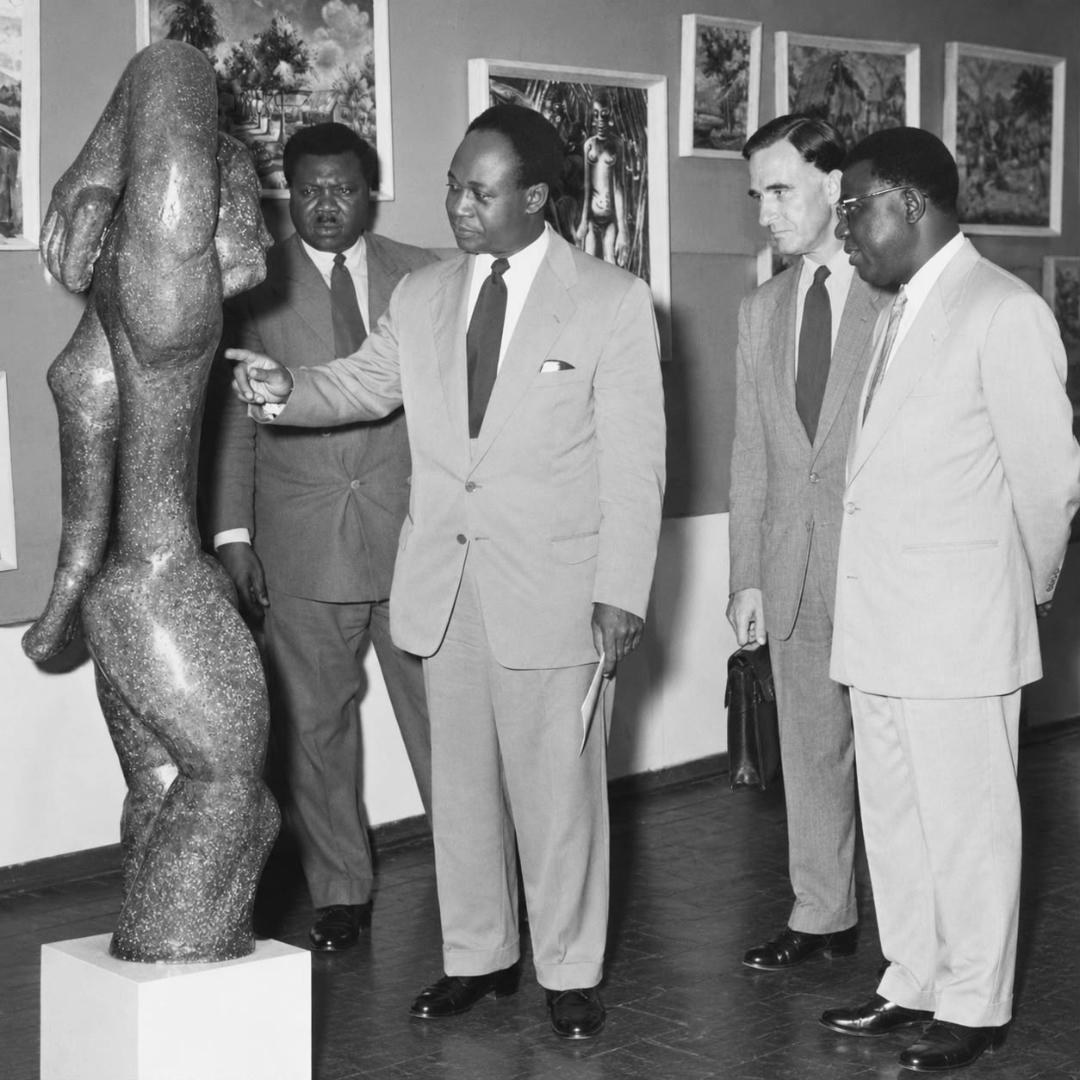
Kwame Nkrumah, in a light suit, points to a tall carved sculpture by Oku Ampofo while three men in suits look on in a gallery hung with paintings.
ArchiveKwame Nkrumah inspects a sculpture by Dr. Oku Ampofo.

The Oku Ampofo Foundation

A doctor who carved in ebony, and a sculptor who healed with plants.

His story

Five chapters of a life in wood and medicine

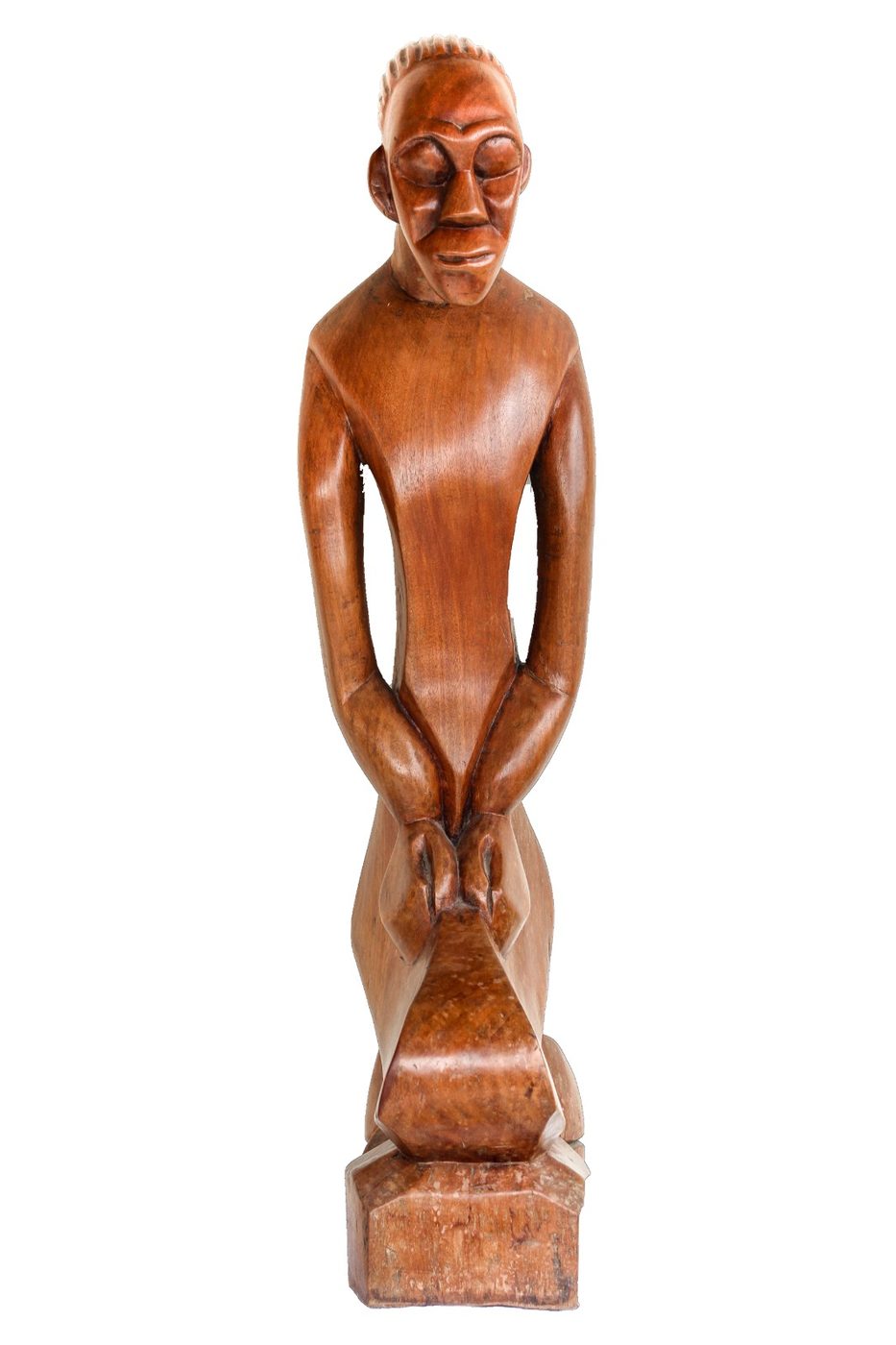
Polished wooden figure of a kneeling worshipper with hands clasped.
At the Shrine, 1955
I · Amanase, 1908

The chief’s son who walked to school

Kwaku Oku Ampofo was born on 4 November 1908 in Amanase, in the Akuapem hills of the Gold Coast. He was the third of eighteen children of Chief Kwasi Ampofo, Odikro of Amanase, and Madam Akua Adwo. His father built the town’s Basel Mission school, and in 1916 the eight-year-old Oku became one of its pupils.

In 1921 he enrolled at Anum, ninety miles away. At the start of every term he and his classmates walked for three days, joining other groups of students at Mangoase, Mampong and Somanya and sleeping wherever night fell. He went on to Mfantsipim, where he became school prefect, and in 1930 to Achimota College, where he met the sculptor H. V. Meyerowitz.

“We were taught to live together as one… when you come to the house, you will not know that this person and that person’s mothers are different.” — Oku Ampofo
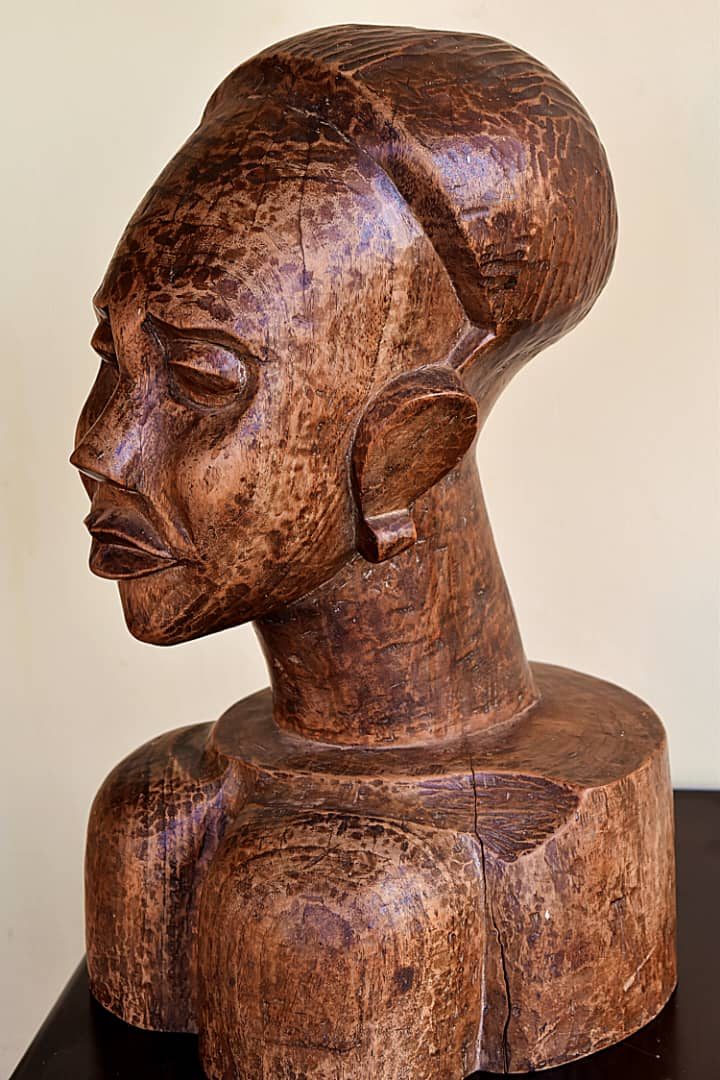
Carved wooden head of a woman with an elaborate dansinkran hairstyle.
Dansinkran, 1943
II · Edinburgh, 1933

A medical scholarship, and evening classes in sculpture

In 1933 he arrived at the University of Edinburgh as the first Ghanaian to win the Gold Coast Government scholarship to study medicine. He also enrolled in evening sculpture classes at the Edinburgh College of Art under Norman Forrest, and became so absorbed in the studio that he nearly lost the scholarship.

The museums changed him most. In British and European collections he found African masks and figures behind glass, cut off from their makers and their meaning. He came away with a sentence he would repeat for the rest of his life.

He qualified in 1939 and sailed home in 1940 with his medical degree and his chisels.

“It was as though the African had to go all the way to Europe to discover himself.”Dr. Oku Ampofo
Golden wooden head of a boy with closed eyes.
The Boy Kumasenu, 1952
III · Mampong, 1940

The Akuapem Six and a national art

Back in Mampong-Akuapem he opened a clinic and a studio side by side. He gathered painters, sculptors, potters and weavers into a circle known as the Akuapem Six, and in the 1940s they staged the Gold Coast’s first exhibitions of new African art in Accra.

In 1950 he helped found the Gold Coast Art Society. At independence it became the Arts Council of Ghana, with Ampofo as its first Vice-President and, from 1969 to 1972, its Chairman. He later chaired the Ghana Museums and Monuments Board.

He also acted. With his wife he appeared in The Boy Kumasenu (1952), one of the first feature films made in the Gold Coast, and carved a portrait head of its young lead.

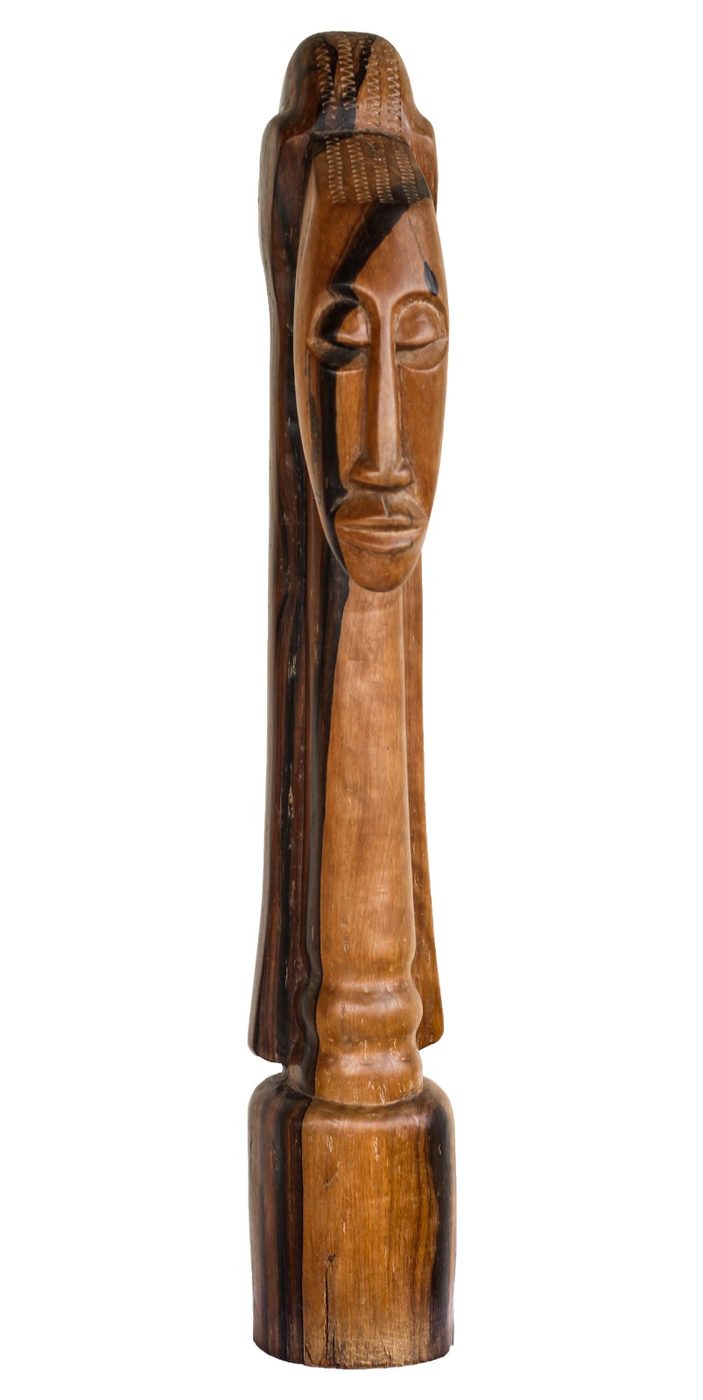
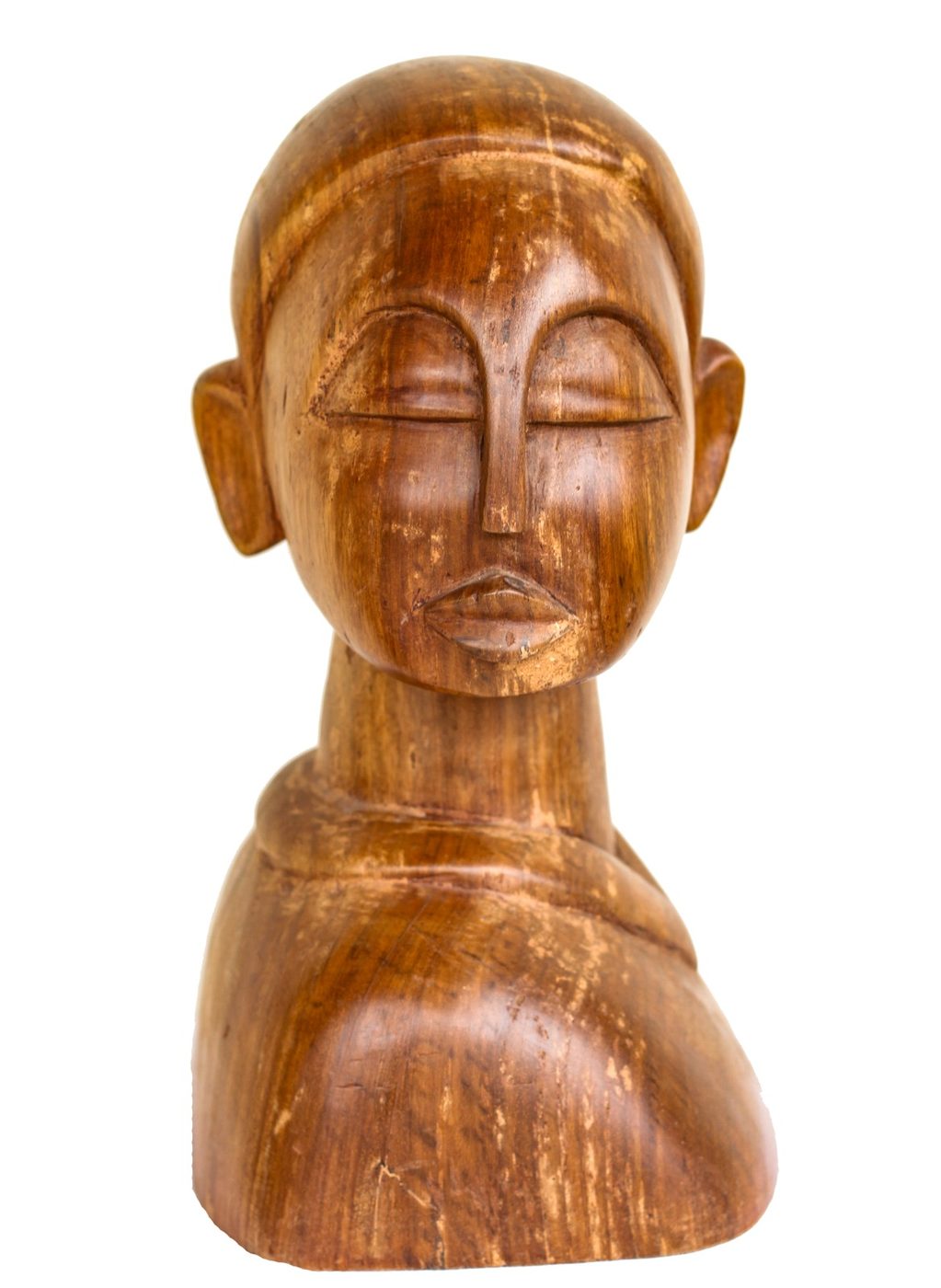
Tall, slender carved head in dark wood with elongated features.
The Initiate
IV · Obikyere

“If someone does not know, another shows”

Ampofo grew up with herbal remedies and never lost faith in them. In the early 1960s he ran a small outpatient clinic at Mampong where he treated patients with plant preparations made with leading traditional healers. He named it Obikyere, from the Akan saying obi nnim a, obi kyerɛ: if someone does not know, another shows them.

Kwame Nkrumah sponsored him to study traditional medicine in China. At home he served as Medical Superintendent of the Tetteh Quarshie Memorial Hospital while pressing for plant medicine to be studied scientifically.

His proposal led to the Centre for Scientific Research into Plant Medicine at Mampong-Akuapem, which he directed from its founding. In 1985 the World Health Organization named it a collaborating centre for traditional medicine, the first in Africa. Its clinic still bears his name.

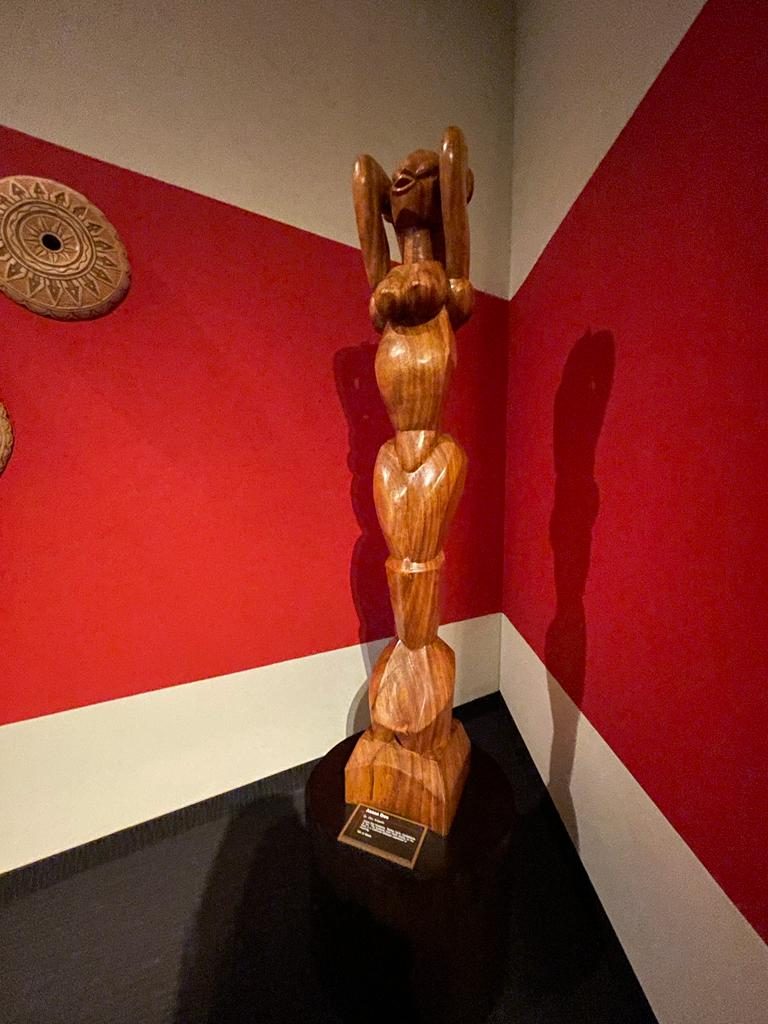
Tall afzelia sculpture of a woman with arms raised over her head, displayed against a red wall.
Asaase Due (Condolences, Mother Earth), 1965 · Afzelia
V · Washington, D.C.

A mourning figure at the Kennedy Center

After the assassination of President John F. Kennedy, Ampofo carved a woman in afzelia with her hands raised above her head, grief moving through her whole body. Asaase Due was given to the Kennedy family and stands in the Africa Room of the John F. Kennedy Center for the Performing Arts in Washington, D.C.

“Together they reflect what my father returned to throughout his career: the suffering of mankind, and the refusal to look away.”Kwame Oku Ampofo, his son

Selected works

The plates

More than two dozen documented works in black ebony, queen ebony, afzelia, odum and African cedar, carved over five decades. Select a plate to view it larger.

Chronology

Ninety years

From a chief’s household in Amanase to the Kennedy Center and the World Health Organization.

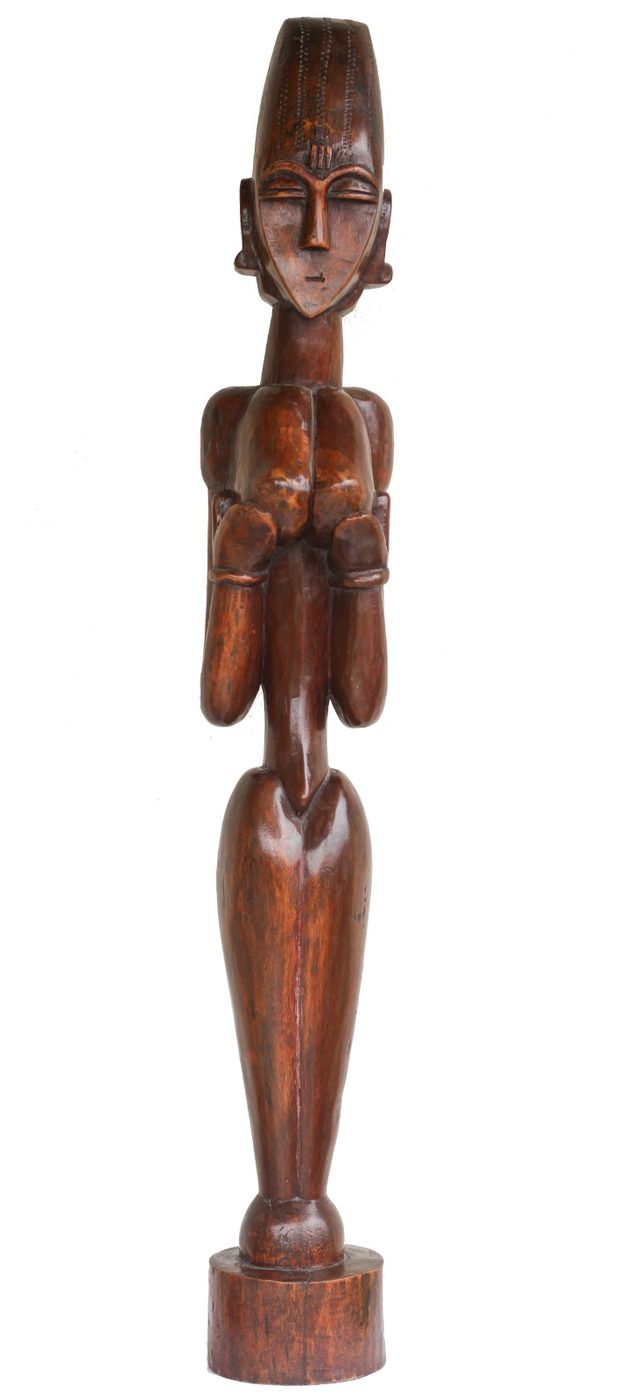
Slender standing wooden female figure.
  1. Born 4 November in Amanase, Akuapem, third of eighteen children of Chief Kwasi Ampofo and Madam Akua Adwo.

  2. Starts at the Basel Mission school his father built in Amanase.

  3. Enrols at Anum, a three-day walk from home. Moves to Mfantsipim in 1926 and becomes school prefect.

  4. Achimota College, where he meets the sculptor H. V. Meyerowitz.

  5. University of Edinburgh, first Ghanaian on the Gold Coast Government medical scholarship. Evening sculpture classes at the College of Art.

  6. Returns to Mampong-Akuapem, opens a clinic and a studio, and gathers the Akuapem Six.

  7. Carves Dansinkran. Daughter of the Earth follows in 1946.

  8. Exhibitions of new African art in Accra.

  9. Co-founds the Gold Coast Art Society, later the Arts Council of Ghana, and serves as its first Vice-President.

  10. Acts in The Boy Kumasenu, one of the first feature films made in the Gold Coast.

  11. At the Shrine, African Madonna and Child, Puberty and Struggle with Tragedy.

  12. Awarded the Grand Medal by the Government of Ghana.

  13. Primordial Instinct in black ebony, then Asaase Due for the Kennedy family.

  14. Exhibits at the World Festival of Black Arts in Dakar.

  15. Chairman of the Arts Council of Ghana.

  16. Leads the new Centre for Scientific Research into Plant Medicine, formally established at Mampong in 1975.

  17. Honorary Doctor of Letters, University of Ghana. Consultant to the WHO on African traditional medicine.

  18. The Centre becomes Africa’s first WHO collaborating centre for traditional medicine.

  19. ECRAG Laureate Award for excellence in sculpture.

  20. Dies on 18 February at Mampong-Akuapem, aged eighty-nine.

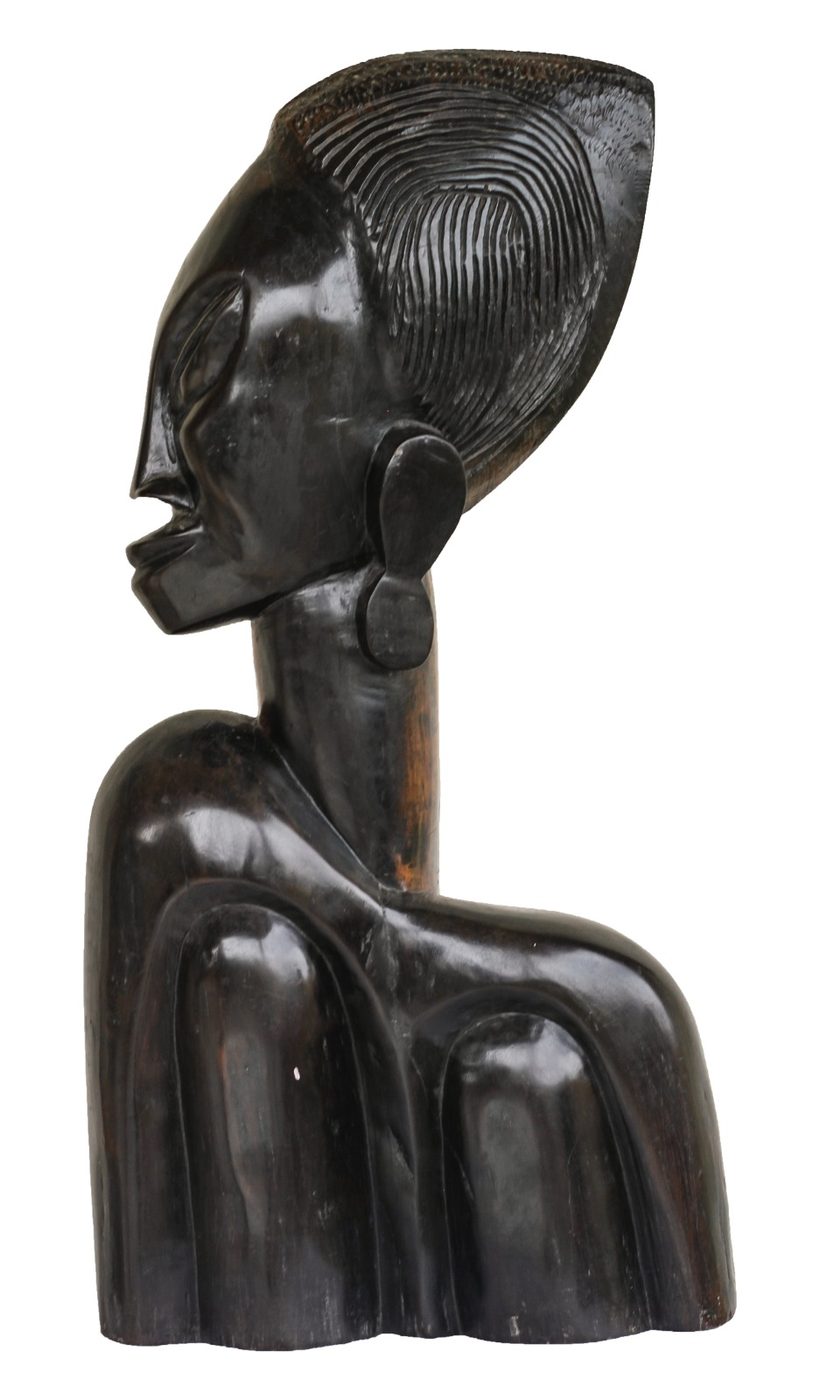
Black ebony bust of a young woman in profile with carved hair.
Study of a Malinke Girl, 1959 · Ebony

Growing up with the sculptor

His son remembers

Between the clinic and the studio

Time was always scarce. On rare off days, I would find him with a clay sculpture or at the piano. Patients would interrupt. I felt I was competing with his work, and I usually lost.

Kwame Oku Ampofo

What drove him

He spoke of a deep inferiority complex in Africa, the idea that Africans were incapable of creating anything of lasting worth. He felt this keenly. But he had an unusual way of handling it. He would laugh genuinely, then find a practical way forward.

Kwame Oku Ampofo

The humour the history books missed

In Togo, before eating as a guest, he quietly announced in Ga that he would eat first. If nothing happened to him in three minutes, we could follow. He was serious about everything, but never too serious for a well-placed joke.

Kwame Oku Ampofo

The inscription on his bust at Mampong

  • Medical practitioner Edinburgh, 1939
  • Researcher Plant medicine
  • Sculptor Five decades in wood
  • Actor The Boy Kumasenu
  • Herbalist Obikyere clinic
  • Lover of music The piano at home
  • Initiator and first Director of the Centre for Plant Medicine Research
“He encouraged confidence in our traditional arts and medicine. It is thanks to him that herbal medicine became a respectable subject of study and research in our country.”President Nana Addo Dankwa Akufo-Addo, 6 March 2017

His works are held in private collections, at the National Theatre in Accra, at the Institute of African Studies in Legon, at the Centre for Plant Medicine Research and in the Kennedy Center. Many of the pieces on this site are being shown to a general audience for the first time.

Support the Foundation

Keep his work in the light

Most of these sculptures have never had a public exhibition. Your gift helps the Foundation conserve the collection, digitise the family archive and bring the work to new audiences in Ghana and abroad.

Make a donation
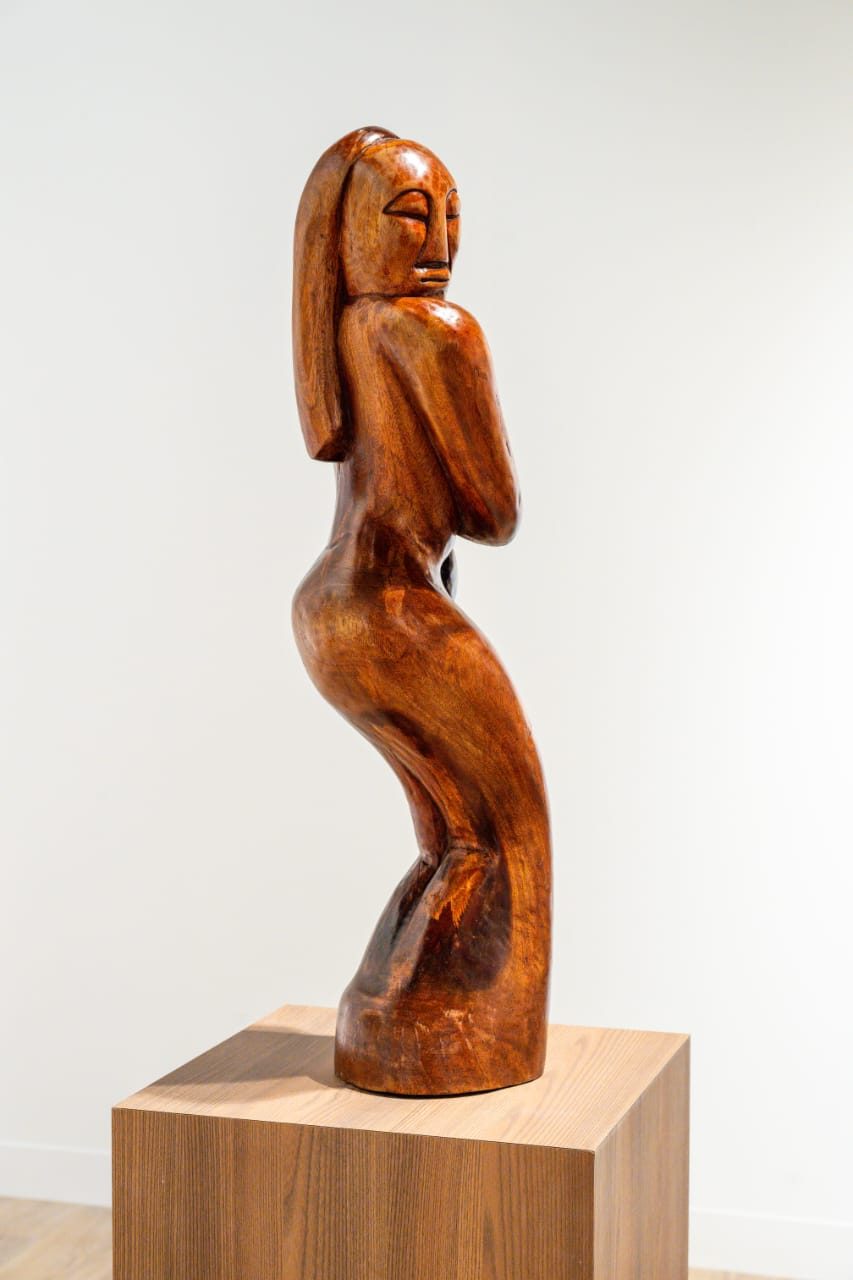
Curving wooden figure of a woman, Daughter of the Earth, 1946.

The Foundation

Exhibitions, loans & enquiries

The Oku Ampofo Foundation cares for Dr. Ampofo’s sculpture and archive and supports research into Ghanaian plant medicine. For exhibitions, loans, research access or press, send a message or contact the family directly.

Contact Kwame Oku Ampofo
Telephone

Send a message